Where Care Meets Courage
Story by: Malala Luttah, She Huru, Kenya
Focus Areas: SDG 3 – Good Health and Well-being; SDG 5 – Gender Equality; SDG 10 – Reduced Inequalities
In coastal Kenya, LBTQ-GNC (Lesbian, Bisexual, Trans, Queer, and Gender Non-Conforming) persons continue to face severe stigma and discrimination in accessing healthcare, especially around HIV prevention, testing, and treatment. Many suffer in silence due to a lack of inclusive, affirming services, and are often met with judgment or outright denial of care from healthcare providers.
At the same time, the community is navigating rising anti-rights rhetoric, religious and cultural taboos, and shrinking funding for HIV interventions targeting marginalised groups. These intersecting barriers not only worsen health outcomes but also contribute to mental health struggles and heightened vulnerability to violence.
Through the Beyond the Stigma project, She Huru is addressing these challenges by documenting lived experiences, building peer support systems, advocating for inclusive health services, and reimagining community-led HIV responses that center LBTQ-GNC voices. This work is driven by the belief that stigma is not just a social issue, it’s a barrier to life-saving care. She Huru is committed to dismantling it, one story, one session, and one safe space at a time.
Beyond the Stigma is an innovative, youth-led response that is built on lessons learned from She Huru’s previous project, Beyond the Myths, which tackled misinformation about STIs, HIV, and sexual health among LBTQ-GNC persons.
This solution emerged from a clear gap: while Beyond the Myths sparked critical conversations and visibility, we saw the need for a deeper, ongoing response to the stigma LBTQ-GNC persons face when accessing HIV services and care. Beyond the Stigma takes this a step further by centering healing, resilience, and systemic advocacy.
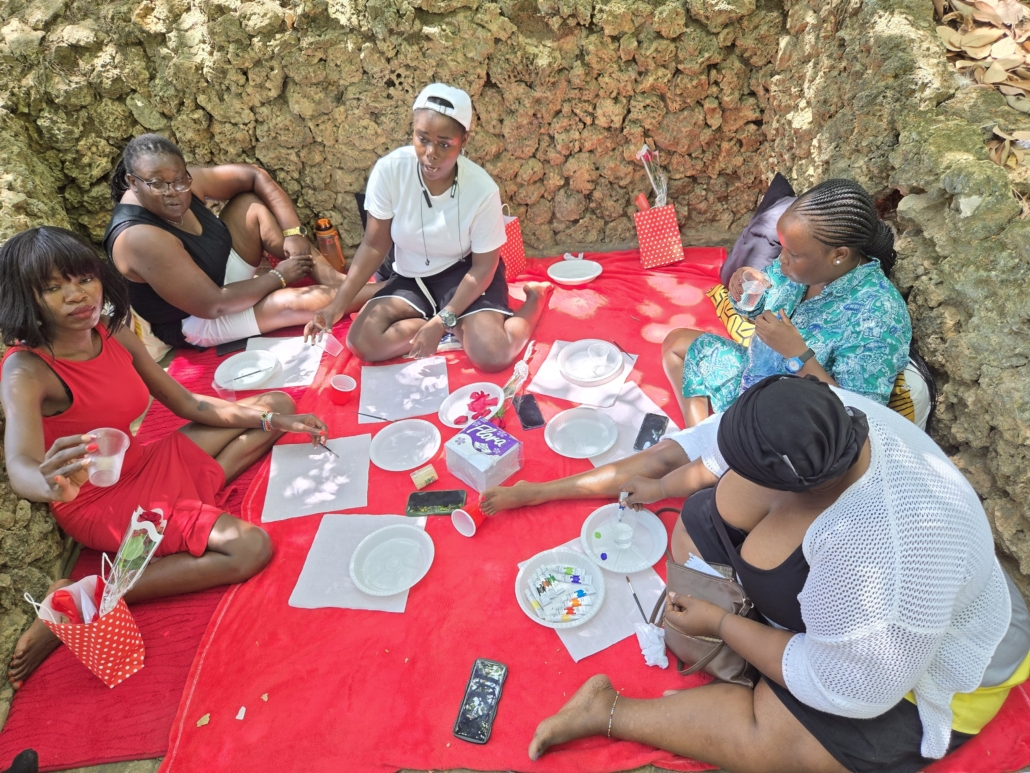
The project is co-designed and led by young queer activists. It brings together peer support, healthcare provider engagement, community storytelling, and digital advocacy. It aims to shift both hearts and systems, by empowering community members to speak up, training service providers to offer inclusive care, and using creative mediums to spark public dialogue.
She Huru is building on the power of collaboration, between youth, healthcare allies, and grassroots organisations, to challenge stigma and reimagine what accessible, affirming HIV care can look like for LBTQ-GNC persons in coastal Kenya.
While Beyond the Stigma is just getting started, the foundation laid by our earlier initiative,Beyond the Myths, has already demonstrated strong impact and momentum that Beyond the Stigma will build on.
The Beyond the Myths project that serves as an inspiration of Beyond the Stigma, over 120 LBTQ-GNC persons in Mombasa were reached through in-person sessions, and engaged four progressive healthcare providers in sensitisation workshops to begin transforming how care is delivered. The digital storytelling and myth-busting campaign reached over 3,000 people online, sparking community dialogue and connection across Kenya.
Subsequently, increased willingness among participants to seek HIV testing, ask questions about sexual health, and access peer support were witnessed. Many shared that it was the first time they had received information that spoke directly to their lived realities without shame or judgment. One healthcare facility even committed to developing internal guidelines to better serve queer patients, an early sign of the systemic change we’re aiming for.
Beyond the Stigma is building on this impact, taking it deeper by focusing on long-term peer support, challenging structural stigma in healthcare, and advocating for sustainable, inclusive HIV services for LBTQ-GNC persons. With continued support, we expect to scale up our reach, strengthen provider partnerships, and amplify youth-led solutions for stigma-free care.
Policy & Advocacy wins:
She Huru partnered with Médecins Sans Frontières (MSF) and their team of medics who operate in various health facilities across Mombasa to facilitate a sensitisation and dialogue session between LBTQ-GNC community members and MSF’s healthcare providers.
This engagement marked an important shift: for many medics, it was their first time hearing directly from LBTQ-GNC persons about how stigma shows up in clinical settings. In response, MSF medics expressed commitment to integrating inclusive practices in their patient care and sharing learnings with colleagues in the facilities where they work. While informal, this is a key first step toward changing institutional culture through trusted intermediaries.
This collaboration also served as an advocacy proof of concept, showing that respectful, youth-led dialogue between communities and healthcare professionals can begin to shift attitudes and practices, even within rigid systems. Beyond the Stigma will build on this by deepening advocacy with partners like MSF, and laying the groundwork for broader institutional and policy-level change.
One of the biggest lessons learned in this initiative is that community trust is everything, especially when working with marginalised groups like LBTQ-GNC persons who are often excluded from mainstream HIV programming. What worked was leading with care, listening deeply, and creating spaces where people could show up as their full selves without fear of judgment. When people feel seen and safe, they open up, and that’s where real transformation begins.
The organisation has a piece of advice for others on a similar path: “start small, stay grounded, and center the voices you’re trying to uplift. Systems don’t change overnight, but every conversation, every safe space, every trained ally gets us closer.”
Next steps will be the full implementation of Beyond the Stigma, a bold, youth-led initiative supported by the AU-EU Youth Action Lab. While Beyond the Myths opened up space for dialogue and peer learning around HIV stigma and sexual health, Beyond the Stigma will take that work further, building long-term resilience, healing, and advocacy among LBTQ-GNC communities.
With the AU – EU YAL funded project, She Huru is scaling up its impact by expanding their peer support structures, led by trained LBTQ-GNC youth who provide safe, affirming education and psychosocial care. There is also a plan to strengthen collaborations with progressive medical practitioners, including those from MSF, to influence inclusive practices within the healthcare system. She Huru will be launching a nationwide digital advocacy campaign, using storytelling and creative media to shift harmful narratives and build public solidarity. Using lived experience and community-generated data to push for stigma-free, inclusive health policies and sustainable HIV funding, She Huru will lay the foundation for institutional change. It is expected that this work will inspire other grassroots collectives and young activists who are seeking to center care, community, and lived experience in their actions. With AU-EU’s support, Beyond the Stigma will not only be a local intervention, but will become a model for what youth-led, queer-centered health advocacy can look like across the continent.