From Margins to Decision Tables: How Youth are Transforming Participation and Decision Making in Governance in Hwange Rural District and Victoria Falls City
Story by: Mgcini Moyo, Youth Invest, Zimbabwe
Focus Areas: SDG 5 – Gender Equality; SDG 1 – No Poverty; SDG 10 – Reduced Inequalities; SDG 8 – Decent Work and Economic Growth; SDG 16 – Peace, Justice and Strong Institutions
In Hwange Rural District and Victoria Falls, young people—especially those from marginalised and rural communities such as Ndlovu, Matetsi, Jambezi, and Kachechete—have historically been excluded from local governance and decision-making processes. This exclusion has been particularly severe for young women, youth with disabilities, and out-of-school youth, who face compounded barriers due to gender, disability, and socio-economic status. As a result, these groups have had minimal access to public information, lacked opportunities to participate in community consultations, and were often left out of critical platforms where decisions around resource management, budgeting, and service delivery are made.
Governance structures such as Ward Development Committees, Hunting Committees, and other resource management bodies remained largely adult-centric, with youth voices sidelined or tokenised. This disconnect not only undermined democratic participation but also led to poor responsiveness from local authorities, weak transparency mechanisms, and little accountability in how natural and financial resources were managed. In turn, this resulted in inequitable benefit-sharing from tourism revenues, hunting quotas, and conservation-based economic activities, with youth missing out on development opportunities. Ultimately, the exclusion of youth perpetuated cycles of poverty, dependency, and disengagement, further weakening community resilience and hindering sustainable service delivery.
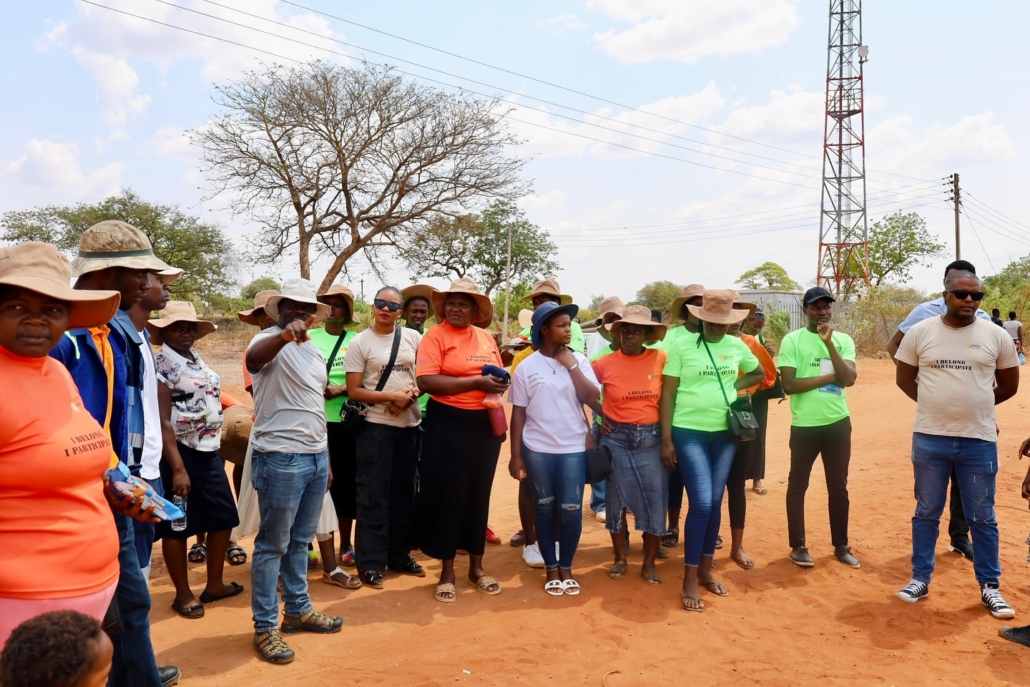
To address the persistent exclusion of youth from local governance structures, the I Belong I Participate (IBP) project implemented a multi-pronged, youth-driven solution that empowered young people to meaningfully engage in decision-making, especially around natural resource governance and service delivery. The project mobilized and trained over 600 youth from rural wards in Hwange Rural District—such as Ndlovu, Matetsi, Jambezi, and Kachechete—and Victoria Falls City. This included young women, youth with disabilities, and out-of-school youth.
The innovation lay in the creation of I Participate Community Action Clubs as inclusive civic spaces for training, dialogue, and advocacy. Through workshops and capacity-strengthening sessions, the youth were equipped with knowledge on local government systems, social accountability, public resource management, and participatory planning. These clubs served as platforms for developing community scorecards, conducting social audits, and facilitating dialogue between youth and duty bearers. The project also supported youth-led resource mapping exercises, enabling communities to identify gaps and advocate for fair resource allocation. Youth leadership was central at every stage, with trained members representing their communities in stakeholder forums, public budget meetings, and ward assemblies. Collaboration with traditional leaders, local councils, civil society partners, and residents’ associations strengthened the legitimacy and impact of the initiative.
The I Belong I Participate (IBP) project has achieved significant, measurable impact in both Hwange Rural District and Victoria Falls City, especially in advancing youth inclusion in governance and natural resource management. To date, over 600 young people—60% of whom are young women and 15% youth with disabilities—have been mobilized, trained, and actively engaged through IBP Clubs. These youth have participated in more than 55 structured engagement meetings with local authorities, including ward development committees, service providers, and traditional leaders.
As a result of consistent advocacy and civic engagement, youth representatives have been formally included in local hunting quota-setting committees and other decision-making structures related to resource governance—an unprecedented shift in areas where such spaces were traditionally adult-dominated. This inclusion has enhanced transparency and accountability in the allocation of hunting revenues and other community development resources. Moreover, increased awareness and civic confidence among youth have led to greater participation in council budget consultations and community development planning meetings—leading to improved responsiveness from duty bearers and a growing culture of inclusive governance.
Policy & Advocacy wins:
Yes, the I Belong I Participate (IBP) project integrated a strong policy and advocacy component aimed at securing youth participation in local governance and natural resource management. One of the most significant outcomes of this advocacy work was the formal inclusion of youth representatives in local hunting quota-setting and community hunting committees in Hwange Rural District. This was achieved through sustained engagement with Hwange Rural District Council (HRDC) officials, traditional leaders, and local conservancy stakeholders, backed by data and community insights gathered through youth-led social accountability actions.
This breakthrough marks a shift in institutional practices, especially in spaces historically dominated by adults and often closed off to young people. In addition to influencing the composition of decision-making committees, the project also contributed to improved youth access to public consultations such as council budget meetings and ward development planning. Local authorities have begun to recognise the role of youth as legitimate governance actors, with several wards initiating steps to formalise youth participation mechanisms. These changes underscore the power of inclusive advocacy and the value of youth-led evidence in influencing policy and practice.
The I Belong I Participate project showed that sustainable youth inclusion requires more than just awareness—it demands structured engagement, relationship-building, and persistence. The deliberate strategy of capacitating youth with knowledge of public policy, governance, and social accountability tools enabled them to engage constructively with local authorities. Training sessions, community dialogues, and participatory resource mapping gave youth the confidence and credibility to advocate for their inclusion. Importantly, collaborating with traditional leaders and duty bearers early on helped reduce resistance and created space for shared understanding.
However, the initiative also highlighted that deep-rooted cultural norms and institutional inertia can slow down progress, especially when decision-making spaces are seen as the preserve of elders or elites. Some youth initially struggled with self-confidence or feared reprisals for questioning authority. Others lacked consistent access to information due to limited digital connectivity in rural areas. These challenges highlighted the need for continuous mentorship, safe engagement spaces, and long-term support mechanisms. For others looking to replicate this approach, the key takeaway is to invest in youth agency, build multi-stakeholder alliances, and advocate for the institutionalisation of youth participation—not just as a one-time activity, but as an ongoing governance norm.
Building on the success of the I Belong I Participate project, Youth Invest’s next steps focus on scaling and institutionalising youth participation across Hwange Rural District and Victoria Falls. There is a plan to replicate the model in additional wards, with a special focus on reaching marginalised youth groups—including those with disabilities and young women—by establishing more I Belong I Participate Clubs, expanding the Youth Advocacy and Accountability Teams (YAATs), and strengthening their engagement with local service delivery structures.